Energy Transition Technology
HECO PRIME
AXON M1
A high-precision multi-fluid mechanical platform, developed to integrate, conduct, dose and combine more than one fluid in the feeding process of internal combustion engines — before the mixture is delivered to the combustion system.
On This Page
Catalogue Index
Product Identity
What is AXON M1
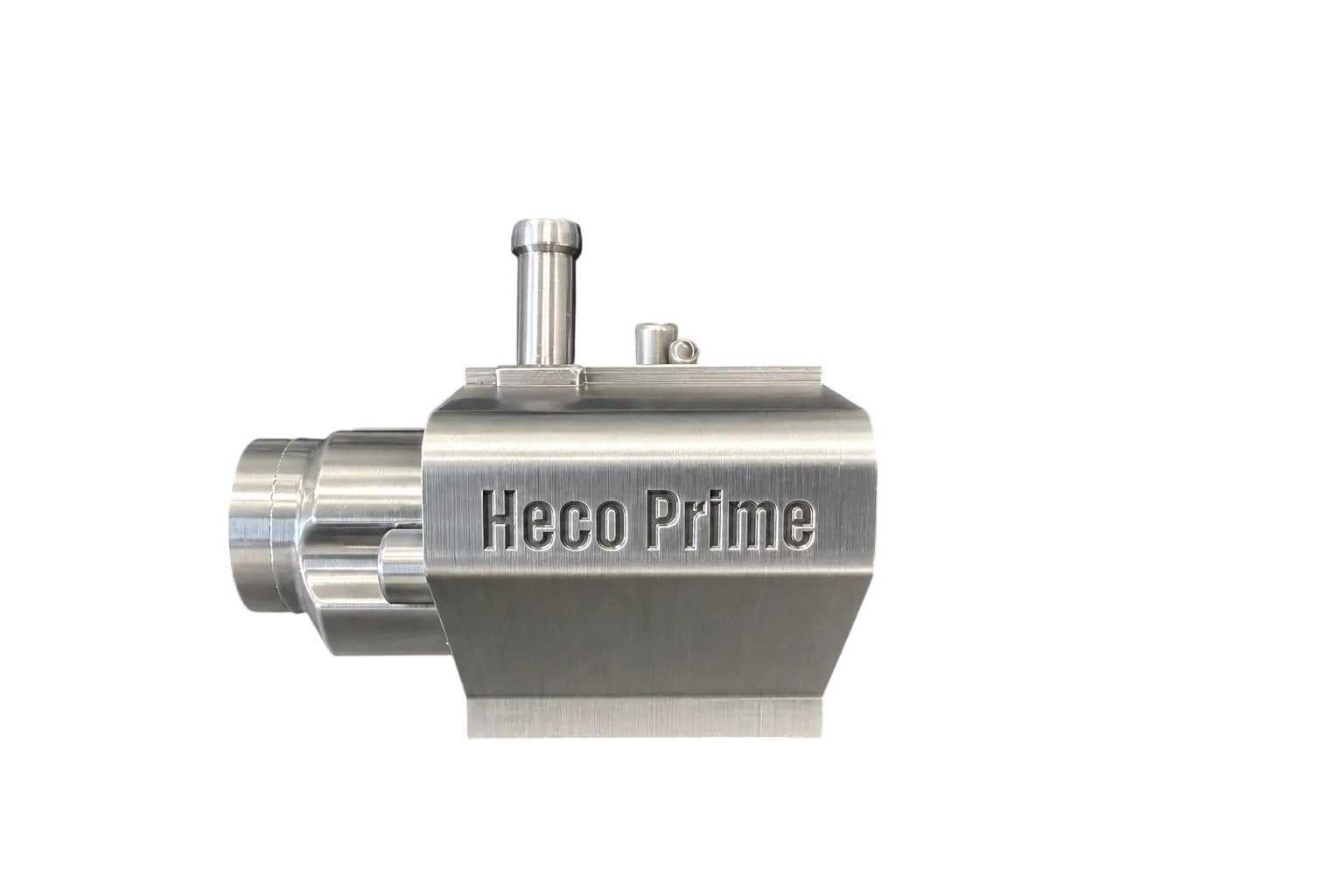
The HECO PRIME AXON M1 is a high-precision multi-fluid mechanical platform, developed to integrate, conduct, dose and combine more than one fluid in the feeding process of internal combustion engines. The architecture considers a main flow and one or more secondary flows, incorporated before the final delivery of the mixture to the combustion system.
The technological concept is not limited to a single fuel, additive or use configuration. In the multi-fluid adapter configuration, the AXON M1 is designed to introduce a second fluid or fuel alongside the main fuel already used by the engine, promoting its incorporation and mixing in the intake line before entering the combustion chamber.
Development possibilities include atomized water or water vapor, alcohol, methanol, ethanol, synthetic fuels and, in specifically designed and approved applications, aviation fuels or other compatible energy fluids. Each combination must be previously tested, calibrated and approved for the engine, the application and the applicable regulation.
| Element | Executive positioning |
|---|---|
| Commercial name | HECO PRIME AXON M1 |
| Category | Multi-fluid technology for energy transition in internal combustion engines |
| Initial market | Retrofit of existing engines, stationary engines, motorcycles, generators and agro-industrial applications |
| Expanded market | OEM integration, commercial fleets, machinery, industrial and marine equipment, distributed generation |
| Core differentiator | Controlled multi-fluid mixing, applicable to both carbureted and electronic-injection systems |
Positioning
Energy transition technology
The global energy transition is not happening uniformly. Electrification is advancing in certain segments, but millions of internal combustion engines will keep operating for a long time in transport, agriculture, emergency power, mining, construction, shipping, logistics and industrial activities.
In this context, the AXON M1 occupies the position of an energy-transition technology. Instead of requiring the immediate disposal of the existing engine, the solution seeks to expand its capability with a multi-fluid architecture, allowing the gradual introduction of complementary fluids, alternative fuels, gases, vapors, additives or thermal agents, according to testing, approvals and each application’s requirements.
| Function | Application on the AXON M1 |
|---|---|
| Retrofit | Functional upgrade of engines and equipment already in operation. |
| Fluid diversification | Ability to incorporate auxiliary and energy fluids according to calibration. |
| Asset preservation | Reduced need to immediately replace engines, machinery and generator sets. |
| Gradual decarbonization | Creation of intermediate routes between fossil dependence and lower-carbon-intensity matrices. |
| Regional flexibility | Adaptation to fuels and resources available in each country or sector. |
| Scalability | A replicable physical product, with potential for series manufacturing and international distribution. |
Commercial expansion prioritizes applications where the economic benefit is measurable and the purchase decision depends on operational return: reduced consumption, use of local fluids, improved combustion stability, lower temperature, extended service life, reduced emissions, or the ability to adapt an engine to a new energy matrix. Every performance claim is tied to specific tests, comparative protocols and defined operating conditions.
Application
Compatibility with engines
The AXON M1's reach depends on its integration with intake systems in which it is technically possible to introduce, dose and mix a secondary fluid before combustion. The product's positioning covers spark-ignition engines with carbureted feed and certain electronic-injection architectures, always subject to specific validation.
Carbureted engines
In carbureted engines, the product can be integrated into the intake assembly or the fluid-feed region, forming a pre-intake and mixing stage before entry into the combustion chamber. The depression generated by the engine itself can be used to induce a secondary fluid, with mechanical regulation, calibrated orifices, valves, diffusers or other control elements.
This market is especially relevant for older motorcycles, water pumps, small generators, stationary engines, agricultural machinery, construction equipment, light vessels and other applications in regions where carburetion remains economically important.
In this application, the AXON M1 works as a secondary-feed adapter: the main fuel continues to be supplied by the original system, while a second fluid is introduced and dosed in the intake assembly, before the combustion chamber.
Electronic-injection engines
In electronic-injection engines, integration respects the intake system's architecture, working pressure, the electronic control unit's strategy, sensors, air-fuel mixture, detonation limits and safety requirements. The solution can operate in a pre-intake configuration, a dedicated multi-fluid body, an integrated adapter, or a specially developed injector, depending on the engine family and the approval stage.
Each electronic application is validated by engineering, since single-point, multi-point, indirect and direct injection systems have different pressures, timings, sensors and diagnostic strategies.
Limitation on diesel engines
Diesel engines operate by compression ignition and use their own fuel-injection systems, without a carburetor. For this reason, the AXON M1's current configuration, presented as an intake pre-mixing adapter, is not offered, installed or sold as a direct solution for diesel engines.
Any future development for dual-fuel operation or multi-fluid assistance in compression-ignition engines would constitute a specific engineering version, with independent approval — this future possibility is not part of the product’s current commercial compatibility.
| Criterion | Carbureted engines | Electronic-injection engines |
|---|---|---|
| Integration | Pre-intake, adapter, mixing body or auxiliary feed. | Pre-intake, dedicated module or approved multi-fluid injector. |
| Control | Predominantly mechanical, pneumatic or differential-pressure. | Mechanical, pneumatic, auxiliary electronic or controlled integration. |
| Markets | Older motorcycles, generators, water pumps, agriculture and legacy equipment. | Automobiles, fleets, modern engines, generators and OEM integration. |
| Advantage | Low retrofit cost and a large installed base. | Larger long-term market and integration with modern platforms. |
| Requirement | Calibration, sealing, safety and repeatability. | Approval, sensor compatibility, emissions and diagnostics. |
Engineering
Fundamentals of the multi-fluid architecture
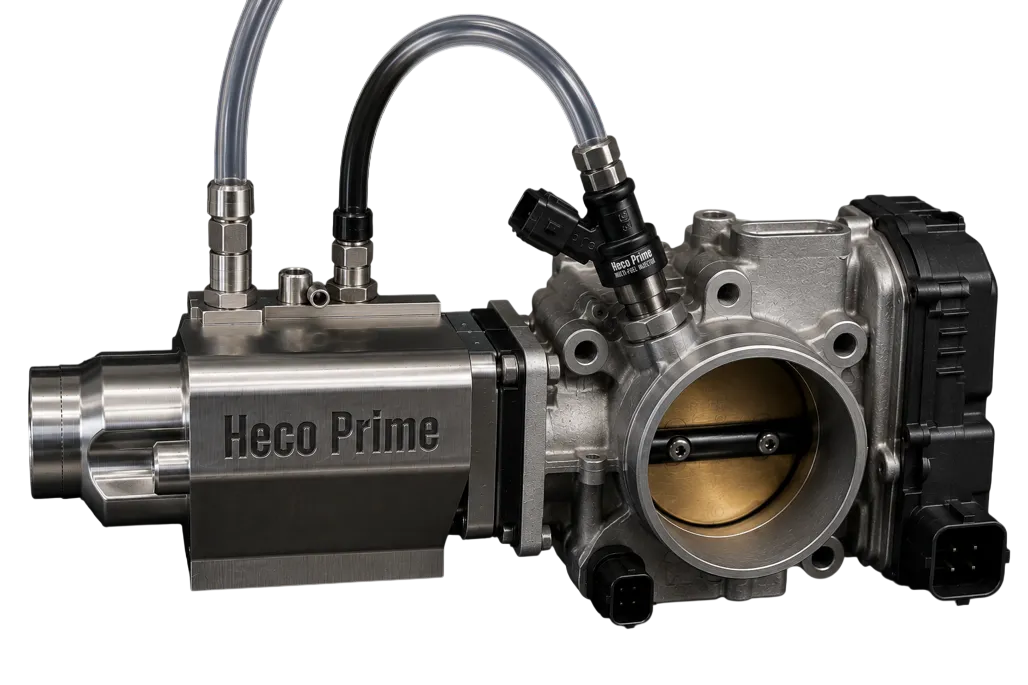
The AXON M1 architecture is based on the principle that combustion can be influenced before the mixture enters the cylinder, through controlled combination of multiple fluids. The technology body integrates a main channel and at least one secondary channel, connected by internal transfer points. The second fluid is incorporated into the main flow by pressure difference, Venturi effect, suction, pumping, external pressure or another induction mechanism.
Main Fluid
Transfer Point
Multi-Fluid Mixture
Delivery to Engine
| Module | Description |
|---|---|
| Main feed | Conducts the first fluid through the main channel of the assembly. |
| Secondary feed | Conducts one or more additional fluids through independent channels. |
| Transfer | Handles communication between the flows through calibrated points, chambers or orifices. |
| Mixing | Promotes combination, homogenization and preparation before delivery to the engine. |
| Calibration | Adjusts flow, pressure, ratio, dynamics and response to the engine's demand. |
| Safety | Includes sealing, retention, flow interruption, filtering and operating limits. |
The technology admits development for liquid fluids, gases, vapors, aerosols and multiphase combinations, provided their introduction is compatible with the intake system, materials, temperature, pressure and combustion strategy. In its adapter function, the AXON M1 maintains a main flow and incorporates a secondary flow before the combustion chamber, with dosage defined by calibration.
Secondary fluids considered for research and approval include: atomized water or water vapor, for thermal-conditioning evaluation; ethanol, methanol and other alcohols; synthetic fuels; combustible gases and vapors; and aviation fuels only in specifically approved engines, materials and applications. A fluid’s compatibility cannot be assumed from its mere combustibility — before commercial release of any combination, calorific value, volatility, autoignition temperature, corrosiveness, lubricity, miscibility, deposit formation, elastomer attack, cold-start behavior, emissions and legal requirements are verified.
Intellectual Property
Protected technology
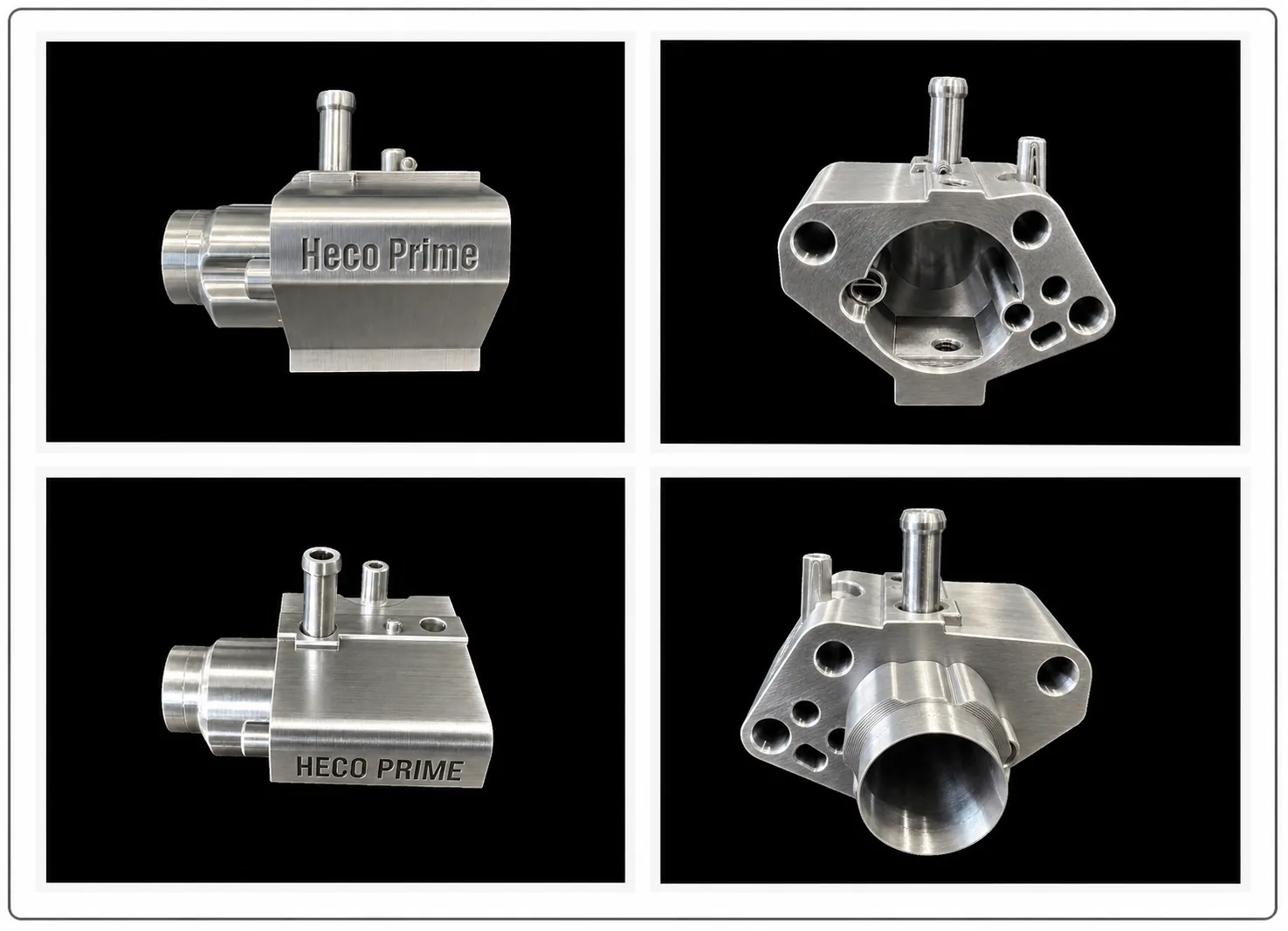
HECO PRIME has developed a family of intellectual-property assets that protect the multi-fluid device, the control method and the combustion architecture of the AXON M1, with a protection strategy across multiple jurisdictions — the same intellectual-property discipline applied to the HECO GGH hydrogen platform.
Want to know more
about the AXON M1?
Talk to our team to understand how HECO PRIME's multi-fluid technology can apply to your engine or fleet.
Talk to Heco