Energy
Clean energy generation and distribution.

The science of H₂
A basic element for life and the most abundant in the entire universe — fuel of the stars and the fourth most abundant element on the planet.
Energy
Despite its size, H₂ holds an enormous amount of energy. Every fuel is made up mostly of H₂ and C — the richer in Hydrogen, the higher its calorific value.
H₂ holds roughly three times more energy per kilogram than petrol, making it one of the most efficient fuels known.
| Fuel | Density (kg/L or m³) | Calorific value Low–High (MJ/kg) | CO₂ emissions (kg/L or m³) |
|---|---|---|---|
| Diesel | 0.85 | 35.8 – 42.7 | 2.7 |
| Ethanol | 0.79 | 19.6 – 26.8 | 1.5 |
| Natural Gas | 0.80 | 37.4 – 44.0 | 1.9 |
| Petrol | 0.76 | 31.8 – 44.4 | 2.3 |
| Hydrogen | 0.09 | 120.1 – 141.9 | 0.0 |
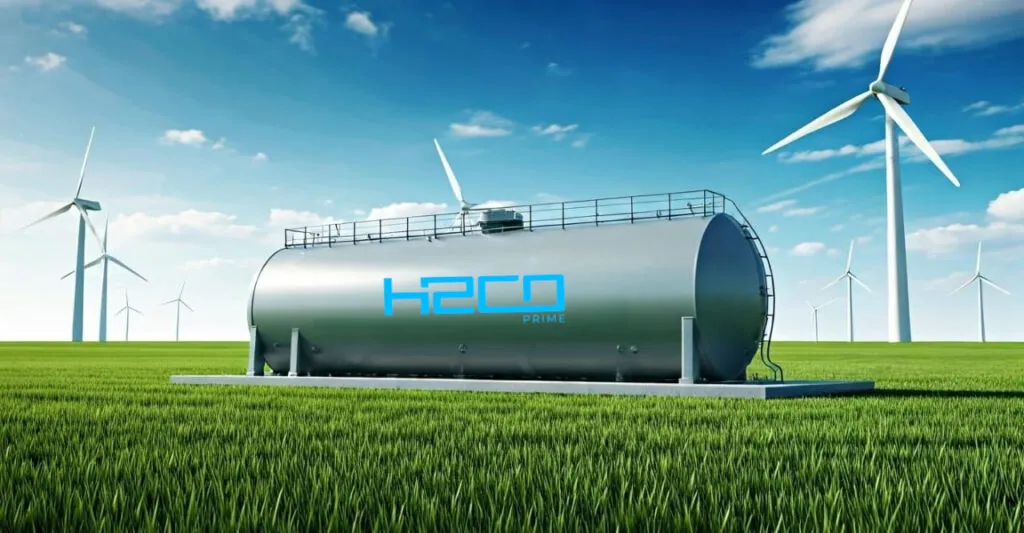
Hydrogen is storable in liquid or gaseous form — and transportable to wherever the energy is needed.
Applications
With such versatility, H₂ is considered one of the best paths to decarbonising the economy.
Clean energy generation and distribution.
Fuel cell vehicles.
Industrial input and raw material.
Pharmaceutical and medical products.
Ammonia and fertiliser synthesis.
Heat source for industrial processes.
Catalyst and reagent.
Metal reduction in metallurgy.
Reagent in organic synthesis.
Renewable energy storage.
Classification
Classified by colour according to CO₂ emissions, production method and raw materials.
The most widely used method. Produced from Natural Gas or Petroleum, releasing CO₂ as a by-product.
Produced from fossil hydrocarbons with CO₂ capture. A low-carbon process compared to Grey.
Water electrolysis powered by renewable energy. Zero CO₂ emissions — the future of energy.
Process
Using renewable energy, the water molecule is split into H₂ and O₂ — without any CO₂ emissions.
Solar and wind power the process.
Electric current splits the molecule.
Zero CO₂ emissions.
Liquid or gaseous, in tanks.
Transport, industry, energy.
Patented technology that produces Green Hydrogen on demand, with an unbeatable energy balance.
See the generator